X-Men: The Issues Collectors Still Chase—and Why They Matter
When collectors talk about the greatest X-Men comics of all time, they aren’t just ranking good stories. They’re identifying issues that changed the direction of the franchise, introduced foundational characters, or defined what the X-Men would become for decades.
Below are several X-Men issues that consistently show up in serious collections—not because of short-term hype, but because their importance has held up through time, reprints, and market cycles.
Giant-Size X-Men #1 (1975)
This issue is widely regarded as the most important X-Men comic ever published. It relaunched the series with a new international team, introducing characters like Storm, Colossus, Nightcrawler, and Wolverine into the core lineup.
From a collector standpoint, its appeal is straightforward: it reshaped the franchise and laid the groundwork for everything that followed. Demand has remained steady for decades, and even lower-grade copies are actively pursued because of the issue’s undeniable historical weight.
X-Men #94 (1975)
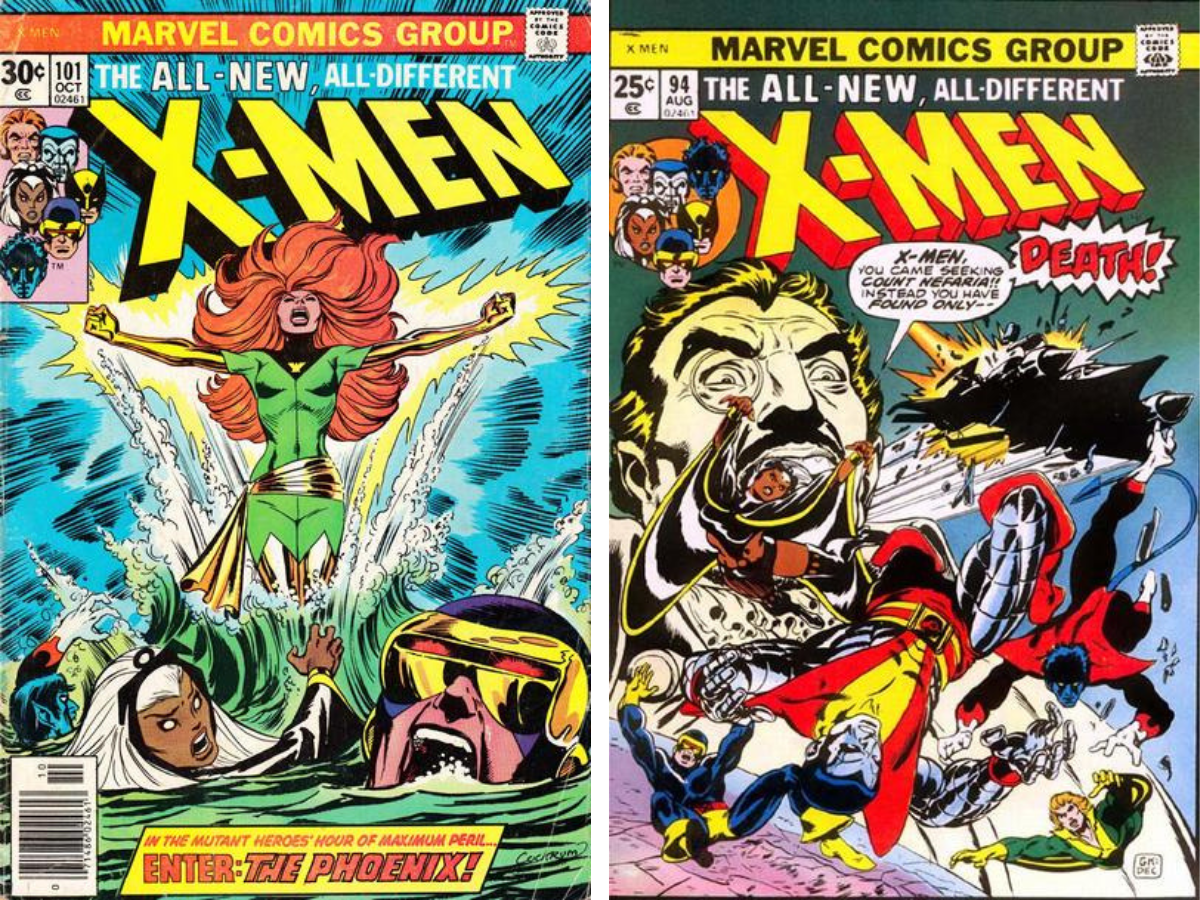
Often overlooked by newer collectors, X-Men #94 is the first issue of the “All-New, All-Different” team to continue in the regular series after Giant-Size #1. It marks the true beginning of the modern X-Men run.
Collectors value this book because it represents continuity rather than a one-off event. It’s the start of a storytelling era that would define the series for years, making it a natural companion piece to Giant-Size #1 in long-term collections.
X-Men #101 (1976)
This issue introduced Phoenix, a storyline element that would eventually evolve into one of the most famous arcs in comic history. While later Phoenix stories often get more attention, this issue is where the transformation begins.
Its importance is subtle but lasting. Collectors recognize it as the first step in a narrative that reshaped Jean Grey and elevated the emotional stakes of X-Men storytelling.
X-Men #129–137 (1980)
The Dark Phoenix Saga is often cited as the defining X-Men storyline, and for good reason. Issues #129 through #137 represent a turning point not just for the series, but for superhero comics as a whole.
X-Men #129 introduced Kitty Pryde, while the arc as a whole demonstrated that superhero stories could be tragic, complex, and permanent. Collectors continue to pursue these issues as a set, with #129 and #137 remaining especially popular due to their character significance and emotional impact.
X-Men #141–142 (1981)
“Days of Future Past” remains one of the most influential X-Men stories ever published. These two issues introduced a dystopian future concept that has been revisited countless times across comics, films, and television.
Collectors appreciate this storyline for its tight storytelling and lasting influence. Even readers who entered the X-Men decades later often trace their interest back to this arc, reinforcing its continued demand.
Uncanny X-Men #266 (1990)
This issue marked the first full appearance of Gambit, a character who quickly became a fan favorite. While 1990s books sometimes struggle with long-term value, this issue has consistently resisted that trend.
Collectors still chase X-Men #266 because Gambit remains culturally relevant, and his debut sits at the crossroads of character popularity and strong artwork—an important combination for sustained interest.
Why These Issues Still Matter to Collectors
What unites these books isn’t just nostalgia. Each represents a moment when the X-Men changed direction, took creative risks, or expanded their world in meaningful ways. These are not disposable stories. They’re reference points.
For collectors, that matters more than trends. Market spikes come and go, but historically important X-Men issues continue to sell because they explain why the franchise matters in the first place.
Final Thought
The X-Men’s legacy isn’t built on one era or one character—it’s built on a series of defining issues that continue to resonate decades later. Collectors who understand that tend to prioritize these books, not as speculation plays, but as cornerstones of a serious collection.
That’s why these issues keep resurfacing—and why they likely always will.

Written by MDZ Menswear